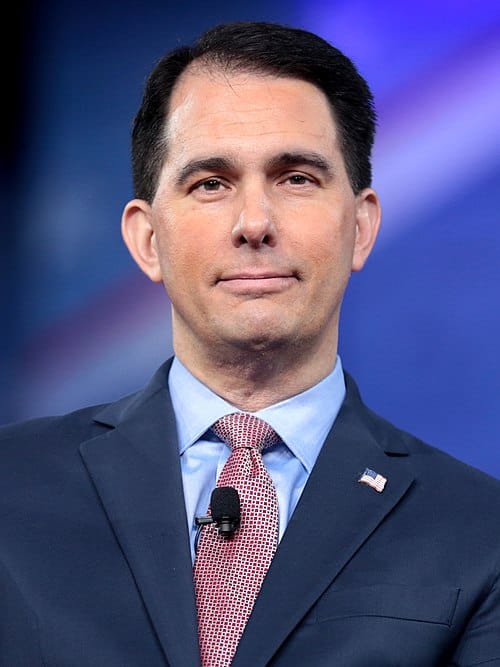
Scott Walker Net Worth 2026: From Negative Debt to $2 Million
President of Young America's Foundation
Scott Walker Net Worth 2026: From Negative Debt to $2 Million Net Worth & Financial Report
Table of Contents
- From Red Ink to Riches: Scott Walker’s Surprising Net Worth Trajectory
- The Young America’s Foundation: A Lucrative Leadership Role
- Walker Group, LLC: A Strategic Foray into Consulting
- Beyond Public Service: Scott Walker’s Real Estate and Investment Footprint
- Pensions, Publications, and Public Speaking: Diverse Income Streams
- FAQ
How does a politician, who once reported a negative net worth and significant credit card debt, end up with millions? Scott Walker’s financial story isn’t one of inherited wealth or corporate titan status before public service. Instead, the former Wisconsin Governor’s journey to a reported $2 million net worth in 2026 is a compelling narrative of strategic post-political career moves, book deals, and a surprising embrace of the private sector after decades on the public payroll.
From Red Ink to Riches: Scott Walker’s Surprising Net Worth Trajectory
It’s a stark contrast to his public image as a fiscally conservative governor who often highlighted his modest personal finances. Back in 2014, Scott Walker’s personal financial disclosures painted a picture of struggle, estimating his net worth at a striking negative $84,000. Much of that debt, it turns out, was tied to student loans for his two college-aged sons, alongside a notable $10,000 to $15,000 in credit card debt, some carrying an eye-popping 27.24% interest rate. A year later, in 2015, his financial situation had barely improved, with an estimated average net worth of just $28,449, even with his Milwaukee home included.
Fast forward to 2020, and the figures began to shift, with estimates placing his net worth around $300,000. But the real acceleration came after his governorship. Today, Scott Walker’s net worth stands at an estimated $2 million. This significant increase wasn’t merely a slow accumulation of savings from a public servant’s salary. It reflects a deliberate pivot into more lucrative ventures outside the political arena, a path many former high-profile politicians eventually tread. His financial evolution from being deeply in the red to a comfortable millionaire is a testament to the opportunities that often await those who transition from public office to the private sector.
The Young America’s Foundation: A Lucrative Leadership Role
Leaving the Wisconsin Governor’s Mansion in January 2019, Scott didn’t immediately jump into a new role. But by July 2019, he announced he would become the president of the Young America’s Foundation (YAF), a national non-profit dedicated to promoting conservative ideas among young people. This wasn’t just any non-profit gig; it was a substantial financial upgrade. The previous president of YAF, Ron Robinson, earned slightly more than $1 million a year in total compensation in 2017, according to federal tax forms.
For Scott, who had spent nearly three decades in public service, with a governor’s salary of $147,328 in 2015, this represented a dramatic shift in his income potential. The YAF position, which he officially began in January 2021, offered a level of compensation far beyond what he earned as a state executive. It provided a stable, high-paying platform to continue advocating for conservative principles, but now with the financial backing of a well-endowed organization that reported total assets of $69.5 million in 2017. This move solidified a significant portion of Scott Walker’s income, moving him firmly into a different financial league.
Walker Group, LLC: A Strategic Foray into Consulting
Before officially taking the reins at YAF, Scott didn’t sit idle. Just four days before his gubernatorial term ended in January 2019, he registered Walker Group, LLC, a domestic limited liability company in Wisconsin. This consulting firm, with its motto of “Moving Conservatism Forward,” quickly became a vehicle for Scott to leverage his political experience and network.
The firm offers services in traditional and digital communications, resource development, and economic development consulting. It’s a classic post-political play: monetizing expertise gained from years in high office. The Walker Group allowed Scott to engage in strategic planning and change management for various clients, from public policy initiatives to business and non-profit enterprises. This venture provided a crucial income bridge between his governorship and his leadership role at YAF, demonstrating a keen understanding of how to transition political capital into private sector earnings.
Beyond Public Service: Scott Walker’s Real Estate and Investment Footprint
While much of Scott Walker’s public financial narrative focused on his modest means, he did hold tangible assets. In 2015, for instance, his personal assets included a Milwaukee home valued at $359,000. Beyond his primary residence, financial disclosures from that period also revealed investments ranging from $20,000 to $200,000, encompassing a whole life insurance plan and a deferred compensation plan from Milwaukee County. These were not exactly the sprawling estates or vast stock portfolios of some of his wealthier political counterparts, but they represented a solid, if unspectacular, foundation.
His financial disclosures in 2015 also listed six individual investments, each valued between $1,000 and $15,000. While not making him a Wall Street titan, these holdings indicate a diversified approach to personal wealth management, moving beyond just a public salary. And it’s worth noting that Scott has also joined the Board of Directors for the National Taxpayers Union, a role that, while primarily advocacy-focused, can sometimes come with compensation or influence that indirectly contributes to one’s overall financial standing.
Pensions, Publications, and Public Speaking: Diverse Income Streams
Scott Walker’s financial picture is further diversified by income streams common among former politicians. He is, for example, eligible for two government pensions—one from the State of Wisconsin and another from Milwaukee County—a benefit of his long career in public service. These pensions provide a steady, reliable income stream in retirement, a significant asset often overlooked in quick net worth calculations.
Then there are the book deals. In 2015, Scott received a $45,000 advance for his book, “Unintimidated,” a common way for public figures to monetize their experiences and perspectives. And like many former governors and presidential candidates, Scott has also engaged in public speaking. His services were offered for $15,000 to $25,000 per occasion by the Worldwide Speakers Group in 2019, providing another avenue for income generation. These varied sources, from guaranteed pensions to one-off book advances and speaking fees, collectively contribute to his current financial standing, pushing his Scott Walker net worth to the $2 million mark in 2026.
Key Takeaways: Scott Walker’s financial evolution from a publicly acknowledged negative net worth in 2014 to an estimated $2 million in 2026 highlights a successful transition from public service to the private sector. His primary wealth drivers include a high-paying leadership role at the Young America’s Foundation, a strategic consulting firm, and traditional income streams like book deals and government pensions. This trajectory contrasts sharply with his earlier financial struggles, showcasing the significant earning potential available to former politicians who leverage their experience outside of elected office.
FAQ
How rich is Scott Walker compared to other politicians?
Scott Walker’s estimated net worth of $2 million places him in a more modest financial bracket compared to some high-profile politicians. For instance, Senator Ted Cruz’s net worth is estimated at $10.7 million as of March 2026, while Hillary Clinton’s individual net worth is around $50 million. However, he is wealthier than some, like Senator Bernie Sanders, whose net worth is estimated at $1.2 million as of February 2026.
How did Scott Walker make their money?
Scott Walker primarily made his money through a combination of post-political career ventures. His most significant income source is his role as President of the Young America’s Foundation, a position that previously paid over $1 million annually. He also earns income from his consulting firm, Walker Group, LLC, book deals like his $45,000 advance for “Unintimidated,” and government pensions from his years as Governor and Milwaukee County Executive.
Does Scott Walker own real estate?
Yes, Scott Walker owns real estate. In 2015, he owned a Milwaukee home valued at $359,000. While specific details on additional current real estate holdings are not publicly detailed, this primary residence has been a consistent part of his disclosed assets.
What is Scott Walker’s salary?
Scott Walker’s salary as Governor of Wisconsin was $147,328 in 2015. However, his current salary as President of the Young America’s Foundation is significantly higher; the previous president earned over $1 million in total compensation annually. He also earns income from consulting fees and public speaking engagements.
References & Sources
Last updated: March 2026. Net worth estimates are based on public financial disclosures and independent research.