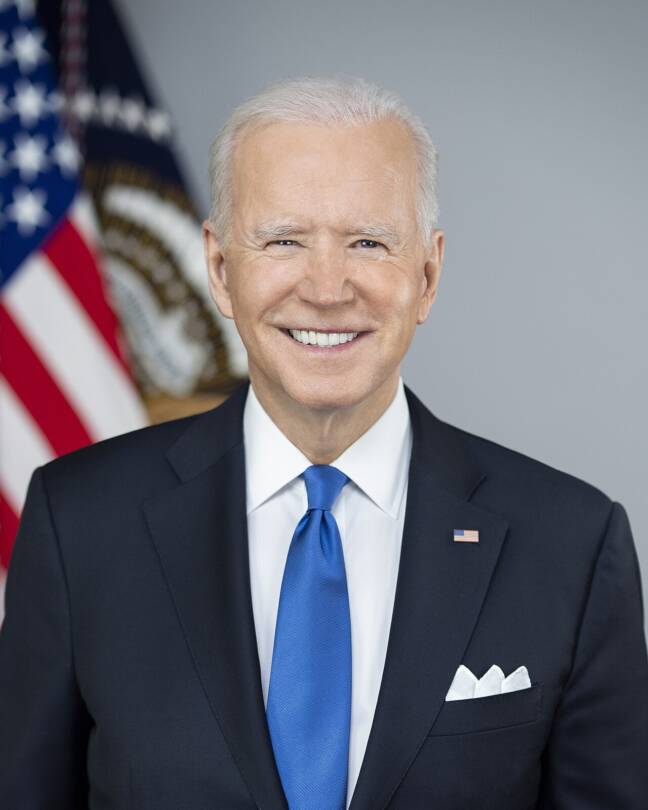
Joe Biden’s financial story isn’t a straight line; it’s a dramatic arc, particularly in recent years. For decades, he was famously known as ‘Middle-Class Joe,’ a public servant whose wealth largely mirrored his government salaries. But after leaving the Vice Presidency in 2017, his financial fortunes took a sharp, upward turn, transforming him into a multi-millionaire through lucrative book deals and speaking engagements. This sudden surge in wealth, a stark contrast to his long career, is perhaps the most compelling chapter in his financial profile.
The Surprising Truth About Joe Biden’s Money
Here’s a detail most people don’t realize about Joe Biden’s finances: during his time as Vice President, he actually rented out a cottage on his Wilmington, Delaware, property to the U.S. Secret Service for $26,400 a year. This arrangement provided a steady, albeit modest, income stream from the very agency tasked with protecting him. It’s a small but telling example of how his personal finances intertwined with his public life, even before his post-White House windfall.
Another lesser-known fact is that Biden secured a $250,000 line of credit in 2022, drawing more than $100,000 on it by the end of 2023. This liability comes with a variable interest rate, meaning his borrowing costs increase as interest rates rise. It highlights a practical financial maneuver for liquidity, even for someone with significant assets.
Income Streams Explained
For the vast majority of his career, Joe Biden’s income was derived from his extensive public service. As a U.S. Senator representing Delaware, his salary saw a steady climb, starting around $42,500 in 1972 and reaching approximately $169,300 by the time he left in 2009 to become Vice President. During his eight years as Vice President, his annual salary was $230,700. Today, as President of the United States, he earns an annual salary of $400,000.
The real game-changer for the Bidens came after he concluded his term as Vice President in 2017. Like many high-profile former officials, he leveraged his public recognition into substantial private earnings. The couple signed a multi-book deal with Flatiron Books, reportedly valued at an estimated $8 million for three books, including Joe Biden’s memoir, “Promise Me, Dad,” and a book by Jill Biden. “Promise Me, Dad,” released in 2017, became a New York Times bestseller. He also continued to earn royalties from his 2008 book, “Promises to Keep”.
Speaking engagements became another significant income generator. Biden routinely commanded six-figure fees for his speeches, sometimes earning as much as $234,820 for a single event. From January 2018 through May 2019, he made 47 paid speaking appearances, with 30 of those being part of his book tour, totaling $4.29 million in fees. Jill Biden also contributed to their income through her own speaking engagements, earning between $25,000 and $46,000 per speech in 2017 and 2018.
Beyond books and speeches, Joe Biden held a position as the Benjamin Franklin Presidential Practice Professor at the University of Pennsylvania from 2017 to 2021, earning an annual salary of roughly $400,000 in 2018. Dr. Jill Biden has maintained her career as an English professor at Northern Virginia Community College, earning around $83,000 to $86,000 annually.
Pensions and Social Security also form a stable part of their financial picture. Joe Biden receives a federal pension that guarantees him an annual income of approximately $160,000 for life. In 2023, the Bidens reported receiving $55,000 in Social Security benefits and $35,000 from pensions and annuities.
What Joe Biden Actually Owns
The core of Joe Biden’s wealth is largely tied up in real estate. He and his wife, Jill, own two significant properties in Delaware. Their primary residence is a mansion in Wilmington, and they also possess a 4,800-square-foot summer home in Rehoboth Beach. The Rehoboth Beach property, purchased for $2.7 million in 2017, saw its value surge to $4.5 million during the pandemic, though its appreciation has since leveled off due to elevated interest rates. About two-thirds of the Bidens’ estimated $10 million fortune is locked into these real estate holdings.
Beyond their homes, their portfolio includes substantial pensions. Joe Biden’s federal pension is valued at over $1 million, while Jill Biden holds a pension worth approximately $250,000. The couple also holds an annuity and some cash reserves. Financial disclosures also indicate the use of LLCs, such as CelticCapri Corp. and Giacoppa Corp., for routing income from speaking engagements and book payments.
Wealth Growth: Year by Year
For decades, Joe Biden’s financial life was characterized by modest growth, primarily tied to his government salaries. When he left the Vice Presidency in January 2017, his net worth was estimated at $2.5 million. However, the years immediately following his departure from the White House marked an unprecedented financial boom. In 2017 alone, the Bidens reported an adjusted gross income of over $11 million. This dramatic increase was almost entirely due to the aforementioned book deals and high-paying speaking engagements.
The momentum continued into 2018, with the couple reporting $4.6 million in income. By 2019, as Biden began his presidential campaign, their income settled to around $1 million, and his net worth was estimated to be around $9 million. In 2020, their earnings were more modest, totaling $630,000.
During his presidency, while his salary is a substantial $400,000, the opportunities for private income streams like speeches and book deals are curtailed. In 2021, the Bidens reported an income of just over $600,000. Their income for 2022 was $580,000, and in 2023, it rose slightly to $620,000. Forbes estimated his net worth at $8 million in June 2021, and by April/June 2024, it had reached an estimated $10 million. This growth during his presidency is largely attributed to his presidential salary, rising real estate values, and the performance of his mutual fund investments. Looking ahead, his net worth is estimated to remain around $10 million in 2026.
Background: Before the Spotlight
Joseph Robinette Biden Jr. was born in Scranton, Pennsylvania, in 1942, into a working-class Irish Catholic family. His father, Joseph Sr., experienced financial setbacks after the war, leading the family to live with maternal grandparents for a period. In 1953, the family moved to Delaware, where his father eventually became a successful used-car salesman, providing a middle-class upbringing.
Biden’s early financial life was far from affluent. He often recounts his humble beginnings, including working as a lifeguard and managing a swimming pool in exchange for free rent for a cottage near a country club, even while practicing law. After graduating from Syracuse University Law School in 1968, he initially worked for a corporate law firm but soon found his calling as a public defender, serving clients from Wilmington’s east side.
His political career began in 1970 with his election to the New Castle County Council. In 1972, at just 29 years old, he successfully challenged a popular incumbent to win a U.S. Senate seat, becoming one of the youngest senators in history. During his 36 years in the Senate, he consistently maintained his “Middle-Class Joe” persona, with his income primarily stemming from his Senate salary. It’s a little-known fact that the Bidens were actually in debt when their son Beau was diagnosed with cancer, underscoring the financial pressures they faced even as a prominent political family. This long period of public service, characterized by steady but not extravagant income, laid the groundwork for the significant financial shift that would occur later in his career.