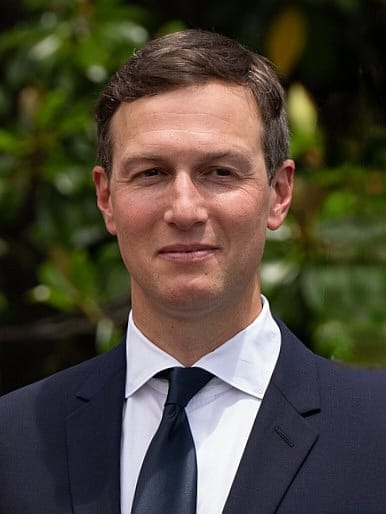
Jared Kushner Net Worth 2026: From $324M to a Billion-Dollar Empire
Founder and Owner of Affinity Partners
Jared Kushner Net Worth 2026: From $324M to a Billion-Dollar Empire Net Worth & Financial Report
Table of Contents
- The $324 Million Starting Line: From Family Business to White House Advisor
- The $2 Billion Saudi Bet: Affinity Partners’ Controversial Backing
- From 666 Fifth Avenue to a $105 Million “Billionaire Bunker”: Real Estate Evolution
- The $25 Million Art Collection and Other Unseen Assets
- A Billion-Dollar Question: The Post-White House Financial Surge
Jared Kushner, a name synonymous with both real estate empires and high-stakes political maneuvering, has quietly ascended to a financial tier that few could have predicted just a few years ago. Once a senior advisor to his father-in-law, President Donald Trump, Kushner’s financial narrative is a striking study in contrasts: a public servant role that paid nothing, followed by a rapid, post-White House surge into the billionaire club. His journey from a prominent New York real estate scion to a global private equity magnate, heavily backed by Middle Eastern sovereign wealth, paints a picture far more complex than his public image often suggests.
The $324 Million Starting Line: From Family Business to White House Advisor
Before his foray into the political spotlight, Jared Kushner was already a significant player in the New York real estate scene, having taken the reins of Kushner Companies after his father’s legal troubles. By early 2017, as he prepared to step into an unpaid senior advisory role in the White House, Kushner’s personal net worth stood at an estimated $324 million, according to a personal financial statement obtained by The New York Times. This wealth was primarily rooted in his family’s extensive real estate portfolio, which included thousands of apartment units and millions of square feet of commercial space across several states.
His transition to government service necessitated a complex divestment process, though he retained significant stakes in numerous limited liability companies and his 20% ownership in Kushner Companies. This arrangement, while legally structured, raised persistent questions about potential conflicts of interest, given the sprawling nature of the family business and its various financial dealings. For instance, Kushner Companies had relationships with major financial firms and its real estate holdings were intertwined with government-backed mortgage giants, entities that could be directly impacted by Trump administration policies. Despite the scrutiny, Kushner maintained that his net worth remained largely stable during his White House tenure, a period he described as “four years off from making money.”
The $2 Billion Saudi Bet: Affinity Partners’ Controversial Backing
The most dramatic chapter in Kushner’s financial story began almost immediately after he left the White House in January 2021. He founded Affinity Partners, a private equity firm based in Miami, Florida. What truly set Affinity Partners apart, and ignited considerable debate, was its primary source of funding: a staggering $2 billion commitment from Saudi Arabia’s Public Investment Fund. This substantial investment, secured just six months after Kushner’s departure from government, was reportedly approved by Saudi ruler Mohammed bin Salman himself, overriding concerns from his own investment committee about Kushner’s limited track record in private equity.
Affinity Partners has since raised a total of $4.6 billion, with additional significant inputs from the Qatari sovereign wealth fund and Abu Dhabi-based Lunate. The firm, which Kushner fully owns, focuses on investing in American and Israeli companies, with a stated goal of fostering an “investment corridor between Saudi Arabia and Israel.” By September 2025, Forbes estimated Kushner’s ownership stake in Affinity Partners alone to be worth $215 million, a notable increase from $170 million in October of the previous year. This rapid capitalization and the firm’s reliance on foreign government funds have drawn intense scrutiny, with some critics suggesting the investments could be a reward for Kushner’s pro-Gulf advocacy during his White House years.
From 666 Fifth Avenue to a $105 Million “Billionaire Bunker”: Real Estate Evolution
Kushner’s real estate dealings have always been central to his wealth, but his portfolio has seen a notable evolution. While he famously spearheaded the $1.8 billion acquisition of 666 Fifth Avenue in Manhattan in 2007, a deal that proved challenging, his post-White House real estate moves have been equally eye-catching.
One of his most prominent personal real estate investments is the $32 million home he purchased in 2020 on Florida’s exclusive Indian Creek island, often dubbed the “billionaire bunker.” This property, which he shares with Ivanka Trump, has seen a dramatic appreciation in value, estimated to be worth at least $105 million by September 2025, representing a nearly threefold jump. This particular acquisition highlights a shift towards high-value residential properties in ultra-exclusive enclaves, a stark contrast to some of the more traditional commercial and multi-family holdings of Kushner Companies.
Kushner Companies itself continues to be a substantial asset, with Kushner’s 20% stake valued at $560 million in September 2025. The company manages a vast portfolio, including 20,000 apartments and 13 million square feet of office and retail space across six states. While his direct management role at Kushner Companies ended when he joined the White House, his ownership stake remains a cornerstone of his wealth.
The $25 Million Art Collection and Other Unseen Assets
Beyond the headline-grabbing real estate deals and the billions managed by Affinity Partners, Jared Kushner’s financial profile includes less-publicized assets that contribute to his considerable wealth. One such holding is his art collection, which is estimated to be worth approximately $25 million. This collection is reportedly focused on supporting emerging artists, offering a glimpse into a more personal, yet still substantial, aspect of his financial interests.
His overall fortune also includes an estimated $150 million in cash and other diversified investments. These liquid assets and varied holdings provide a cushion and flexibility beyond his major real estate and private equity ventures. While the specifics of these “other investments” are less transparent, they underscore a strategy of diversification that complements his more concentrated bets in real estate and private equity. This blend of traditional and alternative investments paints a picture of a sophisticated financial operator, constantly seeking new avenues for growth.
A Billion-Dollar Question: The Post-White House Financial Surge
Jared Kushner’s financial trajectory since leaving the White House in January 2021 has been nothing short of remarkable. From a net worth of $324 million in early 2017, his fortune swelled to an estimated $900 million by November 2024. By September 2025, Forbes reported that Kushner had officially joined the “three-comma-club,” with his net worth exceeding $1 billion. This rapid ascent to billionaire status is largely attributed to the success of Affinity Partners and its significant backing from Middle Eastern sovereign wealth funds, connections cultivated during his time as a senior White House advisor.
His role in negotiating the Abraham Accords, a series of normalization agreements between Israel and several Arab nations, provided him with unparalleled access and relationships in the Middle East. These diplomatic efforts, while serving a public purpose, inadvertently laid the groundwork for his post-government business ventures. The firm’s investments, such as a nearly 10% stake in the Israeli financial services firm Phoenix, have reportedly yielded impressive returns, with Kushner boasting an over nine-times return on that particular bet. Affinity Partners now manages $4.8 billion in assets and has made about 25 investments across various industries and countries. This transformation from a real estate executive to a global private equity leader, fueled by international capital and connections, marks a unique and controversial chapter in American political and financial history.
Frequently Asked Questions
References & Sources
Last updated: March 2026. Net worth estimates are based on public financial disclosures and independent research.