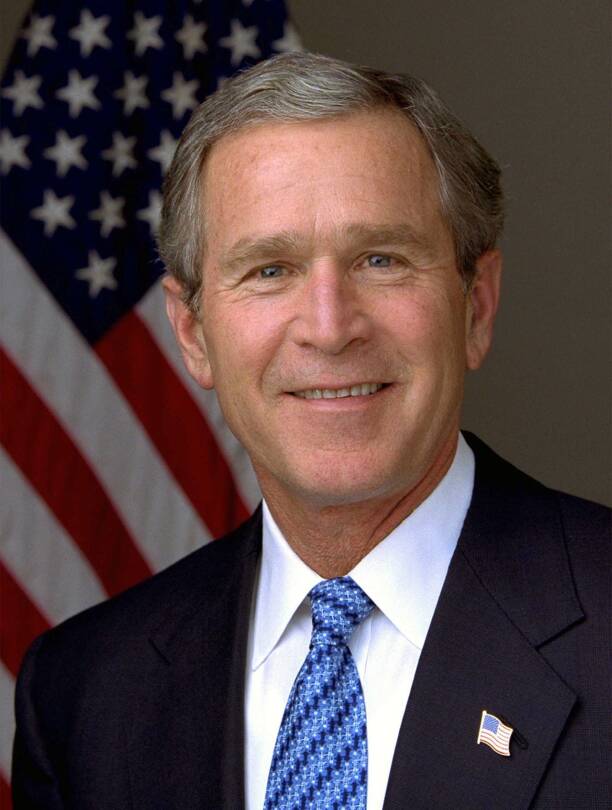
George W. Bush Net Worth 2026: The $500K Texas Rangers Bet That Paid Off
Former President of the United States
George W. Bush Net Worth 2026: The $500K Texas Rangers Bet That Paid Off Net Worth & Financial Report
Table of Contents
- The $500,000 Bet on the Texas Rangers That Paid Off Big
- From the Oval Office to the Lecture Circuit: Bush’s Post-Presidency Speaking Boom
- “Decision Points” and Beyond: A $7 Million Book Deal and Artistic Pursuits
- Prairie Chapel Ranch and Dallas Estates: The Bush Family’s Texas Real Estate Portfolio
- A $40 Million Fortune: How George W. Bush Stacks Up Against Political Heavyweights
George W. Bush, the 43rd President of the United States, has carved out a post-presidency financial life that, while comfortable, stands in stark contrast to some of his more overtly entrepreneurial political peers. While names like Trump and Clinton often conjure images of vast business empires or multi-hundred-million-dollar fortunes, Bush’s financial profile is one of steady growth, rooted in shrewd early investments and a highly successful post-White House career in public speaking and authorship. His current net worth, estimated at $40 million, positions him as a wealthy former president, yet surprisingly modest when compared to the stratospheric figures associated with some other prominent political figures.
The $500,000 Bet on the Texas Rangers That Paid Off Big
Long before he occupied the Oval Office, George W. Bush was a businessman with a keen eye for opportunity, particularly in the oil industry. However, one of his most impactful early financial moves wasn’t in crude but on the diamond. In April 1989, Bush led a group of investors to acquire the Texas Rangers MLB franchise for $86 million. What many might not realize is the relatively modest size of his personal stake: Bush contributed just $500,000 of his own money, much of which he had to borrow from a bank where he previously served as a director.
This initial investment, which gave him approximately 1.8% ownership, was bolstered by an additional 10% stake gifted to him by his partners, recognizing the value of his celebrity in getting the deal done. As managing partner, Bush was actively involved with the team, often choosing to sit with fans rather than in a private box. The team’s value soared, partly due to a new, taxpayer-subsidized stadium. When Dallas businessman Tom Hicks bought the Rangers for $250 million in 1998, Bush’s 12% stake resulted in a remarkable $15 million windfall after taxes. This single transaction, a twenty-five-fold return on his initial $606,302 investment, established him as a millionaire before his political ascent to the Texas governorship and then the presidency.
From the Oval Office to the Lecture Circuit: Bush’s Post-Presidency Speaking Boom
Serving as President of the United States comes with a fixed annual salary, which for Bush was $400,000, along with a $50,000 expense account. While in office, his personal fortune reportedly “shrank,” a common occurrence for presidents who step away from private business ventures. However, upon leaving the White House in 2009, Bush, like many former commanders-in-chief, quickly set about “replenishing the ol’ coffers.”
The lecture circuit proved to be an incredibly lucrative avenue. Bush’s standard speaking fee typically ranges between $100,000 and $175,000 per engagement. By 2011, just two years after leaving office, he had delivered almost 140 paid talks, both domestically and internationally, earning an estimated $15 million from these appearances alone. A 2015 investigation by Politico revealed that he had given at least 200 speeches between 2009 and 2015, contributing “tens of millions of dollars” to his wealth. These engagements, often held at private events for corporate audiences, have been a consistent and substantial income stream, far surpassing his presidential salary.
“Decision Points” and Beyond: A $7 Million Book Deal and Artistic Pursuits
Beyond the speaking circuit, George W. Bush has found considerable financial success as an author. His 2010 memoir, “Decision Points,” offered an inside look at key moments from his presidency and personal life. The book deal for “Decision Points” alone reportedly earned him a $7 million advance. The memoir became a bestseller, selling over 2 million copies in its first few months, further solidifying his financial standing.
Bush has also ventured into other literary and artistic endeavors. He has published two books featuring his paintings, a hobby he took up after leaving office, inspired by Winston Churchill. These works, primarily portraits of world leaders and pets, have attracted national attention and were displayed in his presidential library. Additionally, he penned a biography of his father, the 41st president. These diverse publishing ventures, combined with his speaking fees, have been instrumental in building his post-presidency fortune.
Prairie Chapel Ranch and Dallas Estates: The Bush Family’s Texas Real Estate Portfolio
George W. Bush’s real estate holdings reflect his deep ties to Texas. His primary residence is the Prairie Chapel Ranch, a sprawling 1,600-acre property near Crawford, Texas, which he purchased in 1999. This ranch, often referred to as his “Western White House” during his presidency, is a true natural paradise with lakes, trails, and even a helicopter hangar. While initially bought for an estimated $1.3 million, significant improvements have undoubtedly increased its value over the years.
After leaving Washington D.C., Bush and his wife, Laura, also acquired a substantial home in the exclusive Preston Hollow neighborhood of Dallas. This 8,500-square-foot red brick residence, situated on a 1.15-acre lot, was valued at around $3.95 million in 2007 and was purchased for approximately $2 million. Forbes, in 2024, assessed two of his Dallas properties at $4 million and $2.8 million, alongside the $10 million family ranch outside Waco. These properties form a significant part of his overall wealth, providing both comfort and a tangible asset base.
A $40 Million Fortune: How George W. Bush Stacks Up Against Political Heavyweights
With an estimated net worth of $40 million in 2026, George W. Bush is undoubtedly a wealthy individual, especially considering his career in public service. However, his fortune is surprisingly modest when placed alongside some of his political peers. For instance, former President Bill Clinton’s net worth has been cited at $120 million, while Barack Obama’s is estimated at $70 million. Even his former Vice President, Dick Cheney, reportedly commands a net worth of $150 million, largely from his corporate career.
Bush’s financial trajectory began with his pre-presidency business ventures, particularly the Texas Rangers sale, which netted him $15 million in 1998. He entered the presidency in 2001 with an estimated $20 million. His wealth saw substantial growth post-presidency, fueled by his $7 million book deal for “Decision Points” and millions more from speaking engagements. By 2020, his net worth was close to $40 million, a figure that has remained relatively stable through 2026. While he benefits from a generous annual presidential pension of $210,700 and other taxpayer-funded allowances, a fact many find surprising given his personal wealth, his financial story is less about accumulating vast, diversified business holdings and more about capitalizing on his unique position through traditional post-presidency avenues. His $40 million fortune, while substantial, positions him comfortably but not extravagantly among the top echelons of former political leaders.
Frequently Asked Questions
References & Sources
Last updated: March 2026. Net worth estimates are based on public financial disclosures and independent research.
Related Profiles
 Marco Rubio Net Worth 2026: From Negative Net Worth to a Million-Dolla
 Barack Obama Net Worth 2026: From Public Service to a $70M+ Financial Empire
 Gavin Newsom Net Worth 2026: The $30M PlumpJack Empire
 Michelle Obama Net Worth 2026: From $1.3M to a $70M Empire
 Donald Trump Net Worth 2026: The $2 Billion Crypto Bonanza