Elon Musk Net Worth 2026: The $839 Billion Reality
CEO and Product Architect of Tesla; Founder, CEO, and Chief Engineer of SpaceX; Founder and CEO of xAI; Founder of The Boring Company and X Corp.
Elon Musk Net Worth 2026: The $839 Billion Reality Net Worth & Financial Report
Table of Contents
- The $839 Billion Empire’s Ground Zero: Corporate Physical Assets
- Starbase and the Martian Dream: A $542 Billion Physical Investment
- Gigafactories: Tesla’s $166 Billion Industrial Behemoths
- Beneath the Surface: The Boring Company’s Tangible Infrastructure
- A Personal Footprint (or Lack Thereof) and the Future of Physical Expansion
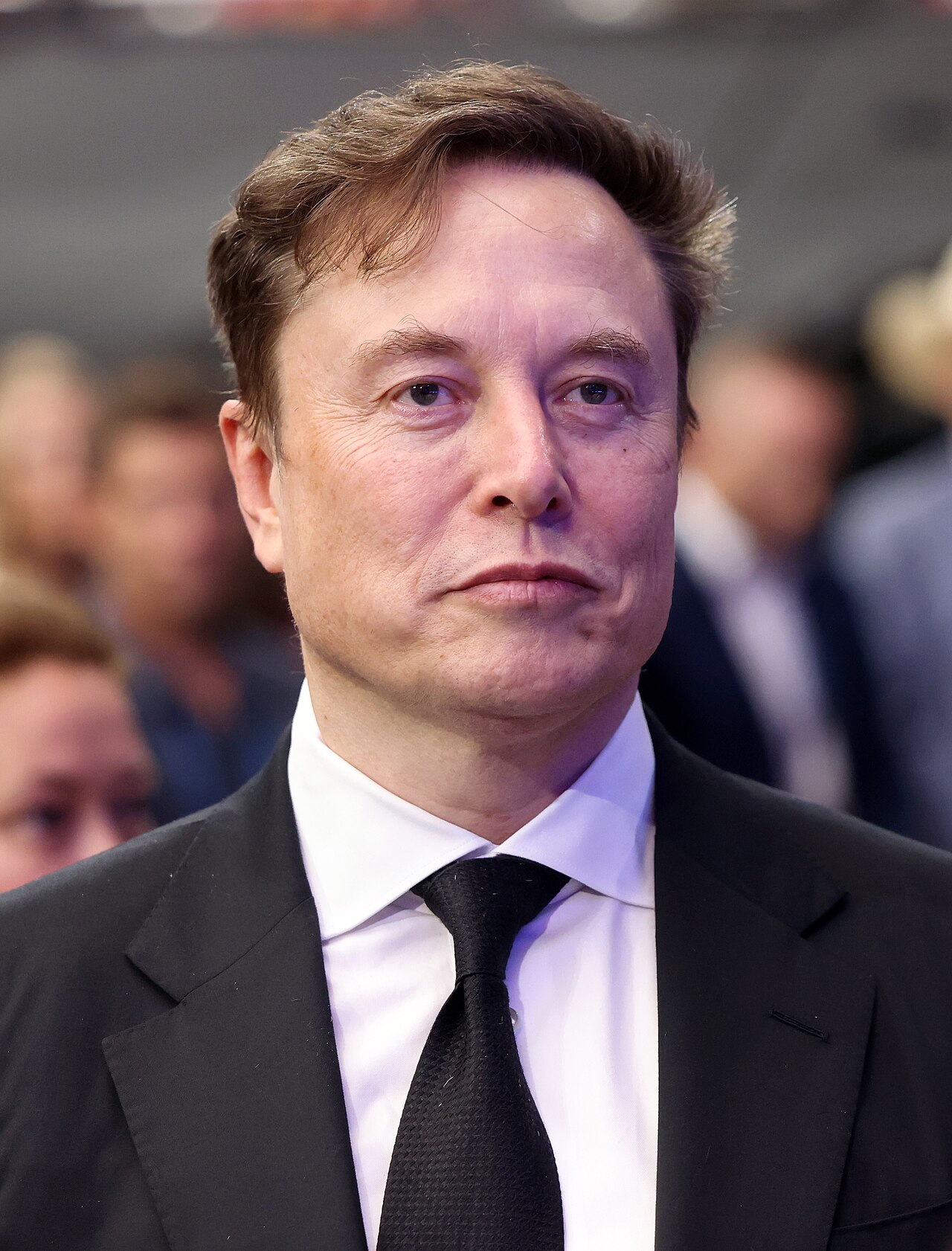
A staggering $839,000,000,000 — that’s the estimated net worth of Elon Musk as of 2026, a figure that almost defies comprehension. It positions him not just as the world’s wealthiest individual, but as an economic force unto himself, dwarfing the fortunes of even the most powerful political figures. For context, Michael Bloomberg, a former New York City mayor and media titan, commands a fortune estimated around $100 billion, while former President Donald Trump’s net worth hovers closer to $3 billion. Musk’s wealth isn’t merely substantial; it’s on an entirely different plane, reflecting a relentless drive to redefine industries from automotive to aerospace.
Musk, the visionary behind some of the planet’s most transformative companies, remains deeply entrenched in his enterprises in 2026. He’s the CEO and Product Architect of Tesla, constantly pushing the boundaries of electric vehicles and sustainable energy. He also serves as the Founder, CEO, and Chief Engineer of SpaceX, charting humanity’s course to the stars. Beyond these behemoths, he’s the Founder and CEO of xAI, an endeavor poised to reshape artificial intelligence, and the Founder of both The Boring Company and X Corp., ventures that promise to revolutionize urban infrastructure and digital communication, respectively. His wealth, rooted primarily in his stock market investments and venture capital successes, isn’t just a number; it’s a direct reflection of the physical empires his companies are building across the globe and beyond.
The $839 Billion Empire’s Ground Zero: Corporate Physical Assets
Elon Musk’s personal financial profile in 2026 is an anomaly, particularly when one considers his stated preference for divesting himself of personal real estate. He’s famously sold off his homes, opting for a minimalist personal living arrangement. Yet, to focus solely on his personal domicile would be to miss the colossal physical footprint of his industrial empire. His estimated net worth of $839,000,000,000 isn’t held in cash under a mattress; it’s intrinsically tied to the tangible assets of the companies he controls. Think of the sprawling Gigafactories, the towering rocket launchpads, and the underground tunnel networks – these are the physical manifestations of his financial might, assets that, while corporately owned, are fundamentally extensions of his vision and control. His wealth isn’t just theoretical; it’s etched into steel, concrete, and silicon across continents. Doesn’t that make his “personal” lack of real estate an even more striking contrast?
His most valuable asset in 2026, an estimated 43% stake in SpaceX, is worth around $542 billion. This isn’t just a paper valuation; it represents ownership in a company that possesses some of the most advanced and expansive physical infrastructure on Earth, and increasingly, in orbit. SpaceX’s facilities, from its Hawthorne, California headquarters to its groundbreaking Starbase in Boca Chica, Texas, are vast industrial complexes. These aren’t just offices; they’re factories where rockets are designed, built, and tested, where engines are forged, and where the very future of space exploration is being assembled piece by physical piece. The land, the buildings, the specialized machinery — they all contribute to the tangible value underpinning that $542 billion stake, making them, in essence, Musk’s physical assets by proxy.
Starbase and the Martian Dream: A $542 Billion Physical Investment
When one considers Elon’s $542 billion stake in SpaceX, the mind invariably turns to Starbase, the sprawling complex on the Gulf Coast of Texas. This isn’t just a launch site; it’s a city-sized facility dedicated to building, testing, and launching the Starship rocket system. The sheer scale of Starbase’s physical assets is breathtaking: immense high bays for rocket assembly, a dedicated launch tower that dwarfs surrounding structures, propellant tank farms, and vast tracts of land for testing and expansion. These aren’t abstract investments; they are concrete, steel, and advanced composites, forming the very foundation of humanity’s multi-planetary ambitions. The value of the land, the specialized manufacturing equipment, the advanced robotics, and the sheer volume of materials used in constructing these colossal rockets and their support infrastructure represent a staggering physical investment.
Beyond Starbase, SpaceX operates a network of physical assets crucial to its operations. There’s the McGregor, Texas, rocket development and test facility, where engines like the Merlin and Raptor undergo rigorous ground testing. There are also various satellite ground stations around the world, essential for the Starlink constellation, which itself consists of thousands of physical satellites in low Earth orbit. While these satellites aren’t “real estate” in the traditional sense, they are very much physical assets, meticulously engineered and deployed, forming a vast, interconnected network that represents a significant portion of SpaceX’s tangible value. Each launch pad at Cape Canaveral, each drone ship for Falcon 9 recovery, each piece of specialized tooling — they all contribute to the physical empire that underpins Elon’s largest fortune in 2026.
Gigafactories: Tesla’s $166 Billion Industrial Behemoths
Elon’s 12% stake in Tesla, valued at $166 billion, also represents a substantial claim on a global network of colossal physical assets: the Gigafactories. These aren’t just factories; they’re integrated production facilities designed to manufacture electric vehicles, batteries, and solar products on an unprecedented scale. Each Gigafactory — be it in Nevada, Texas, Berlin, or Shanghai — is a testament to the immense physical investment required to electrify the world. The Gigafactory Nevada, for example, is one of the largest buildings by footprint on Earth, a sprawling complex of concrete, steel, and advanced robotics, churning out battery cells and power trains.
The Gigafactory Texas, a massive facility near Austin, serves as both Tesla’s new headquarters and a manufacturing hub for vehicles like the Cybertruck and Model Y. Its sheer size and the complexity of its manufacturing processes — from stamping and painting to final assembly — represent an extraordinary physical asset. These facilities aren’t merely buildings; they house billions of dollars worth of specialized machinery, assembly lines, robotics, and advanced production equipment. The land they occupy, the infrastructure built around them, and the sheer volume of raw materials and finished goods flowing through them make these Gigafactories critical physical components of Elon Musk’s overall net worth of $839,000,000,000. They are the tangible engines driving Tesla’s global ambition.
Beneath the Surface: The Boring Company’s Tangible Infrastructure
The Boring Company, another of Elon Musk’s ventures, might operate largely out of sight, but its assets are profoundly physical. Its core mission involves digging tunnels, and to do that, it requires massive, specialized tunneling machines. These aren’t small tools; they’re colossal pieces of engineering, capable of boring through dense rock and soil to create subterranean passages. The company owns and operates these machines, along with all the supporting equipment necessary for excavation, muck removal, and tunnel lining. The tunnels themselves, once completed, become permanent, tangible infrastructure assets, transforming urban mobility beneath the surface.
Consider the Vegas Loop, a system of underground tunnels transporting passengers in Tesla vehicles. The tunnels, the stations, the ventilation systems — these are all concrete, steel, and electrical infrastructure, physically embedded within the city. The land acquired for entry and exit points, the depots for maintenance of the tunneling machines, and the vast amounts of materials used in construction all represent significant physical assets under The Boring Company’s purview. While perhaps not as visually striking as a rocket launch or a Gigafactory, these subterranean networks and the machinery that creates them are a very real, very physical part of the empire contributing to Elon’s overall financial standing.
A Personal Footprint (or Lack Thereof) and the Future of Physical Expansion
It’s an intriguing paradox: a man whose personal real estate holdings are virtually non-existent presides over an industrial empire with an unparalleled physical footprint. Elon Musk, famously, doesn’t own a traditional home in 2026, preferring to live in a modest rented dwelling or even at his company facilities. This personal choice stands in stark contrast to the vast, tangible assets his companies command. It highlights a philosophy where personal consumption takes a backseat to industrial expansion and the pursuit of ambitious, world-altering projects. His focus isn’t on accumulating personal property, but on building the physical infrastructure for the future, whether that’s electric vehicles, rockets, or AI data centers.
Looking ahead, the physical assets under Elon’s influence will only continue to expand. xAI, his artificial intelligence venture, will require immense data centers and computing infrastructure, representing vast physical investments in servers, cooling systems, and specialized hardware. X Corp., the entity formerly known as Twitter, maintains extensive server farms and network infrastructure globally, crucial physical assets for its operations. The future isn’t just about software and algorithms; it’s about the physical foundations that enable them. The current Elon Musk net worth of $839,000,000,000 is thus deeply intertwined with the physical world, built on tangible assets that span from Earth’s surface to low Earth orbit and beyond. He’s not just a billionaire; he’s a builder of physical realities.
Frequently Asked Questions
References & Sources
Last updated: March 2026. Net worth estimates are based on public financial disclosures and independent research.