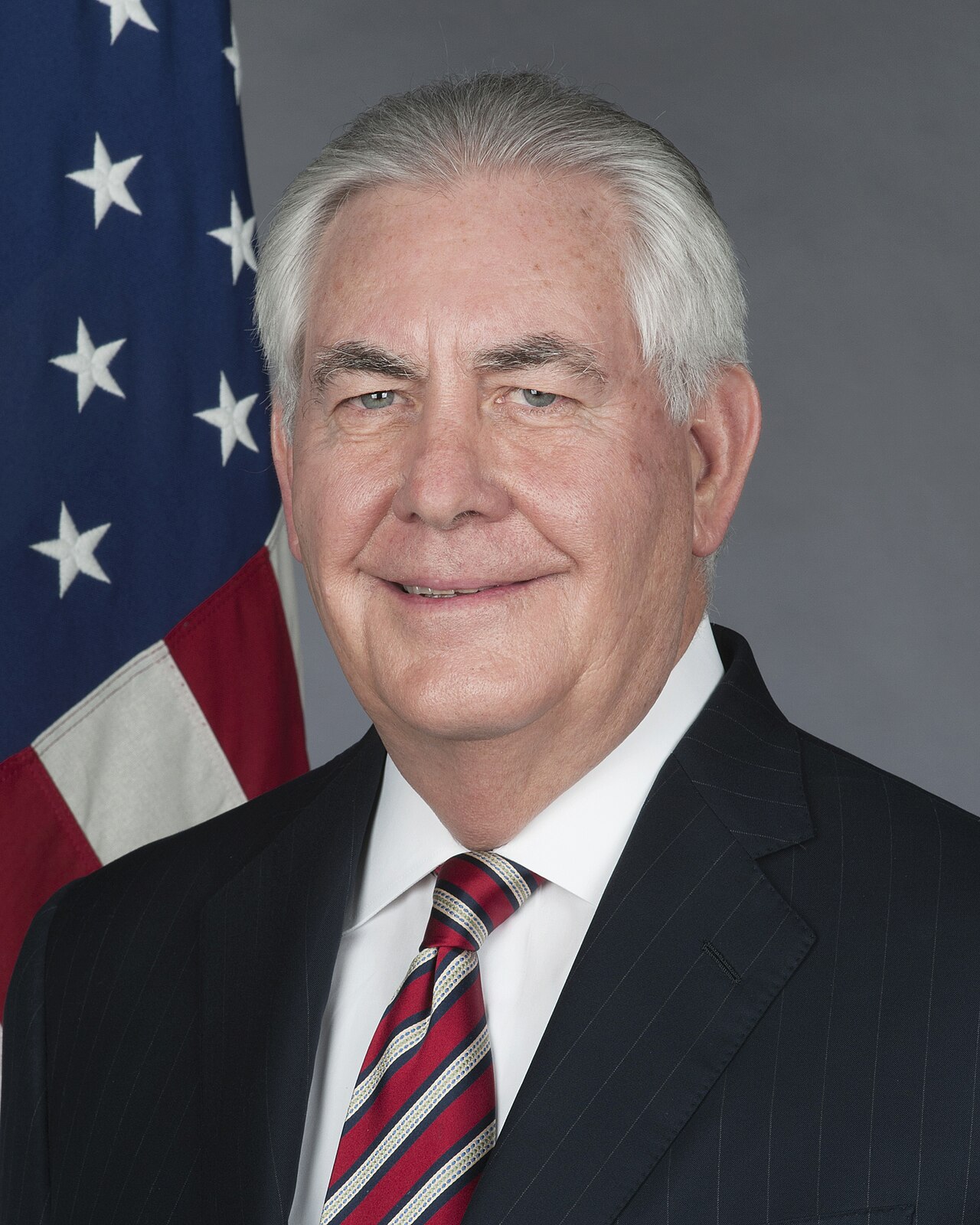
Rex Tillerson Net Worth 2026: The $180M Exxon Severance Deal
Former U.S. Secretary of State, now private citizen and investor
Rex Tillerson Net Worth 2026: The $180M Exxon Severance Deal Net Worth & Financial Report
Table of Contents
- The $180 Million Severance Trust: A Golden Handshake’s Enduring Power
- Texas Ranches and a D.C. Mansion: Tillerson’s Tangible Assets
- Post-Government Life: Board Seats and Diversified Investments Fueling $300 Million
- The Quiet Power of Private Capital: How Tillerson Compares
- From Oil Baron to Private Investor: Tillerson’s Enduring Financial Strategy
How does a former Secretary of State, who spent a relatively brief period in public service, emerge with a personal fortune that dwarfs most of his political peers? The answer, in the case of Rex Tillerson, boils down to a meticulously constructed financial foundation, rooted deeply in corporate America, and shrewd investment strategies that have continued to flourish in his post-government life. By 2026, Rex Tillerson’s net worth stands at an impressive $300,000,000, a figure that speaks volumes about his enduring financial acumen and the powerful financial currents that shaped his career long before he ever stepped into the halls of Foggy Bottom.
Tillerson, now a private citizen and investor, didn’t build his wealth on a government salary. Instead, his fortune represents the culmination of decades at the helm of a global energy giant, followed by strategic real estate ventures and diversified stock market investments. It’s a financial profile that sets him apart, even among Washington’s wealthy elite, underscoring the stark difference between wealth generated in the private sector and that accumulated through public service. His financial journey, particularly the mechanisms put in place upon his departure from ExxonMobil, offers a fascinating glimpse into the mechanics of extreme wealth preservation and growth.
The $180 Million Severance Trust: A Golden Handshake’s Enduring Power
The most striking, and arguably controversial, cornerstone of Rex Tillerson’s wealth is the massive severance trust established upon his departure from ExxonMobil in 2017. Valued at an astounding $180 million at its inception, this trust wasn’t just a standard retirement package; it was an intricate arrangement designed to manage the financial implications of his transition from corporate titan to Secretary of State. The structure aimed to prevent any perception of conflict of interest, ensuring that he wouldn’t profit directly from his former company while serving in a high-profile government role. But make no mistake, that $180 million wasn’t just sitting idle; it represented a colossal infusion into his personal wealth, managed by an independent trustee, and destined to become a primary engine for his future financial growth.
This trust, a testament to his long tenure and executive power at ExxonMobil, immediately placed Tillerson in an entirely different financial league than most incoming cabinet members. While the intention was to insulate him from direct financial ties to ExxonMobil during his public service, the capital itself remained his. By 2026, the initial $180 million has had years to compound and diversify, managed by professionals, contributing significantly to his current $300,000,000 net worth. It’s a financial head start that few public servants ever experience, allowing him to approach his post-government life not just comfortably, but with substantial capital ready for deployment into new ventures and investments. This severance wasn’t merely a parting gift; it was a foundational block for a financial empire that continues to expand.
Texas Ranches and a D.C. Mansion: Tillerson’s Tangible Assets
Beyond the formidable trust, Rex Tillerson’s tangible assets paint a clear picture of a man who values substantial, lasting investments. His portfolio includes two expansive ranches in Texas, properties that speak to both his roots and his affinity for land. These aren’t just recreational properties; they represent significant real estate holdings, likely appreciating in value and offering both personal enjoyment and a solid asset base. Land, particularly large tracts in resource-rich states like Texas, often proves to be a resilient and rewarding investment, holding its value even through economic shifts.
Then there’s the Washington D.C. mansion, a stately residence that served as his base during his time as Secretary of State. Listed for sale in late 2023 with an asking price of $6.5 million, this property underscores another facet of his financial strategy: strategic real estate acquisition and divestment. Selling a high-value asset like a D.C. mansion, especially after his tenure in public office concluded, would have injected further liquidity into his investment pool, allowing him to reallocate capital as he saw fit. This move reflects a clear pivot away from the demands of Washington life and back towards private investment pursuits. These real estate assets, both the enduring Texas ranches and the strategically sold D.C. property, form a crucial component of his overall $300,000,000 fortune, balancing his diversified financial holdings with concrete, appreciating physical assets.
Post-Government Life: Board Seats and Diversified Investments Fueling $300 Million
In 2026, Rex Tillerson isn’t just resting on his laurels; he’s actively engaged as a private citizen and investor, continuing to grow his wealth through a combination of corporate board seats and shrewd stock market investments. Unlike a typical former politician who might rely heavily on speaking fees or a government pension, Tillerson’s financial engine runs on the kind of capital deployment and strategic oversight familiar to seasoned corporate executives. He now advises various companies, lending his considerable experience in global energy, international relations, and complex organizational management to their boards. These positions, while not as publicly scrutinized as his past roles, provide substantial compensation and further opportunities for networking and investment insight.
His wealth sources clearly state “Stock Market Investments” and “Corporate Board Seats,” indicating a hands-on approach to his post-government financial life. The capital from his ExxonMobil severance, combined with proceeds from real estate transactions like the D.C. mansion sale, has fueled a diversified investment strategy. He’s likely invested across various sectors – perhaps technology, finance, or even emerging energy markets – leveraging his deep understanding of global economics. This proactive investment posture is precisely what keeps his Rex Tillerson net worth 2026 figure robust, allowing him to continually build upon his existing fortune rather than simply draw from it. Isn’t it fascinating how some individuals transition so seamlessly from public service back to the highly lucrative world of private capital?
The Quiet Power of Private Capital: How Tillerson Compares
When we look at Rex Tillerson’s $300,000,000 net worth, it becomes starkly clear how different his financial trajectory is compared to many career politicians. Consider, for instance, a hypothetical long-serving U.S. Senator who, after decades of public service, might command a net worth of, say, $5 million to $15 million, largely built on a consistent salary, wise investments over time, and perhaps some modest real estate. The gap between that figure and Tillerson’s is immense, highlighting the quiet, yet profound, power of private capital and corporate executive compensation.
Tillerson didn’t just earn a salary; he managed a global corporation with a market capitalization in the hundreds of billions. His compensation packages at ExxonMobil included not just base pay but extensive stock options, performance bonuses, and deferred compensation plans that, over decades, created a truly staggering personal fortune. His brief stint in government, while impactful, was a detour from a career path that was already set to make him extraordinarily wealthy. His current wealth isn’t a result of his government tenure; it’s the product of a lifetime in the highest echelons of corporate power, skillfully managed and strategically deployed. This contrast challenges the common perception of wealth accumulation in public life, showing that for some, government service is simply a chapter in a much larger, financially driven narrative.
From Oil Baron to Private Investor: Tillerson’s Enduring Financial Strategy
Rex Tillerson’s financial profile in 2026 isn’t just a snapshot of his current assets; it’s a living testament to an enduring financial strategy that prioritizes substantial, long-term investments and strategic capital allocation. He built his initial fortune as an “oil baron,” navigating the complex, high-stakes world of global energy. That experience didn’t just teach him about oil and gas; it honed his understanding of market dynamics, geopolitical risk, and the power of diversified assets. Now, as a private citizen and investor, he applies those same principles, albeit without the direct operational responsibilities of a CEO.
His current strategy appears to be a blend of stability and growth: maintaining valuable real estate like his Texas ranches, actively managing a diverse investment portfolio, and leveraging his expertise through corporate board engagements. The $300,000,000 net worth isn’t static; it’s the result of ongoing financial decisions and a disciplined approach to wealth management. He’s moved beyond the public spotlight of Washington, D.C., returning to a realm where his financial acumen can operate with fewer constraints. Tillerson’s journey from the executive suite of ExxonMobil to the highest levels of U.S. diplomacy, and then back to the world of private investment, underscores a powerful truth: for individuals of his caliber and background, true financial independence is a continuous, carefully orchestrated endeavor, far removed from the ebb and flow of political office.
Frequently Asked Questions
References & Sources
Last updated: March 2026. Net worth estimates are based on public financial disclosures and independent research.