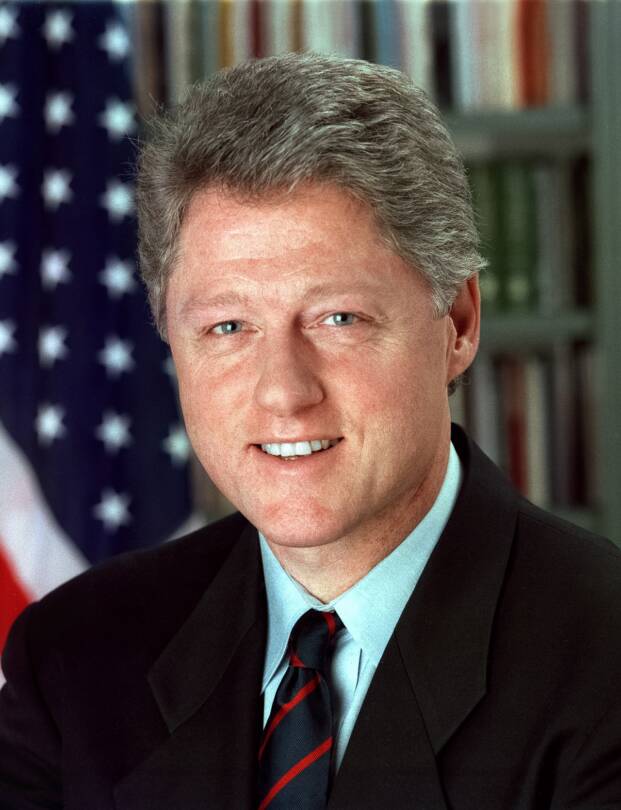
Bill Clinton Net Worth 2026: From Debt to a $100 Million Fortune
Former President of the United States
Bill Clinton Net Worth 2026: From Debt to a $100 Million Fortune Net Worth & Financial Report
Table of Contents
- From Humble Arkansas Roots to Presidential Salary
- Leaving Office in the Red: A Surprising Financial Low
- The Speaking Circuit: A Global Goldmine
- Literary Success: Multi-Million Dollar Memoirs
- Strategic Investments and Real Estate Holdings
- A Financial Evolution: From Public Servant to Global Statesman
- Bill Clinton’s Net Worth: A Snapshot in 2026
Imagine leaving the most powerful office in the world, not with a bulging bank account, but with millions in legal debt. That was the reality for Bill Clinton in 2001. Fast forward to 2026, and the 42nd President of the United States commands an estimated individual net worth of $100 million. This dramatic financial turnaround, from being “dead broke” to a centimillionaire, is a story of leveraging global influence, intellectual capital, and a relentless work ethic into a formidable personal fortune.
From Humble Arkansas Roots to Presidential Salary
Bill Clinton’s financial beginnings were far from opulent. Growing up in Hope and Hot Springs, Arkansas, he didn’t come from inherited wealth. His early career in public service reflected modest earnings. As Attorney General of Arkansas, and later during his five terms as Governor, his salary was notably low. In 1991, for instance, his gubernatorial salary was $35,000, supplemented by $3,167 from a state public relations fund. This was, at the time, the lowest salary of any U.S. governor.
Interestingly, during these early years, his wife, Hillary Rodham Clinton, often out-earned him. In 1992, as an attorney and corporate board member, Hillary earned $188,547, including $64,700 in fees for sitting on several corporate boards, while Bill’s reported income was $46,854. This dynamic meant Hillary was the primary breadwinner for a period, a fact many might not realize given Bill’s later prominence.
Upon entering the White House in 1993, Clinton’s presidential salary was $200,000 annually, a figure that had remained unchanged since 1969. While this was a substantial sum, it was far from the wealth accumulated by many of his predecessors or the Washington elite he would soon interact with. In a move that benefited future occupants of the Oval Office but not himself, President Clinton signed legislation in September 1999 to double the presidential salary to $400,000, effective January 2001, after his term concluded.
Leaving Office in the Red: A Surprising Financial Low
The end of Bill Clinton’s presidency in January 2001 brought a surprising financial reality: he was deeply in debt. Legal fees stemming from the Whitewater investigation and the Monica Lewinsky scandal had accumulated to an estimated $12 million to $16 million. Hillary Clinton herself disclosed legal bills totaling between $2.3 million and $10.6 million as a Senate candidate. This stark contrast between the power of the presidency and the personal financial strain is a defining chapter in his money story. He famously quipped, “I never had a nickel to my name until I got out of the White House, and now I’m a millionaire,” reflecting the immediate post-presidency struggle.
This period of debt highlights a crucial aspect of high-profile public service: the immense personal cost of political battles. Unlike many private sector executives, presidents don’t leave office with golden parachutes or massive stock options. For the Clintons, the immediate aftermath of the White House was about rebuilding their finances from a negative starting point.
The Speaking Circuit: A Global Goldmine
The true engine of Bill Clinton’s post-presidency wealth has been the global speaking circuit. Almost immediately after leaving office, he transformed into one of the world’s most sought-after and highest-paid speakers. His ability to command massive fees for his insights on leadership, global affairs, and his time in office quickly erased his debts and built a substantial fortune.
Just two weeks after exiting the Oval Office, Clinton earned $125,000 for a speech at Morgan Stanley Dean Witter & Co. in New York. This was just the beginning. Between 2001 and 2013, he delivered 542 speeches, earning an astounding $104.9 million. By 2007, he had already amassed an estimated $40 million from speaking fees alone. His fees often ranged from $200,000 to over $400,000 per event, with some appearances fetching as much as $500,000 or even $700,000, such as a speech in Nigeria in 2011. The financial industry proved to be a particularly frequent sponsor, hiring him for at least 102 appearances and paying him $19.6 million between 2001 and 2013.
This speaking prowess wasn’t just about domestic engagements; a significant portion of his income, $56.3 million, came from foreign speeches in countries like China, Japan, Canada, and the United Kingdom. His busiest year on record was 2012, when he gave 72 paid speeches, earning $16.3 million. This consistent demand for his presence and perspective has been a cornerstone of his financial success.
Literary Success: Multi-Million Dollar Memoirs
Beyond the podium, Bill Clinton found immense financial success in publishing. His memoir, “My Life,” published in 2004, secured him an advance of more than $10 million, which at the time was believed to be the largest ever for a nonfiction book. Some reports even suggest the advance was $15 million. This record-breaking deal surpassed the $8 million advance his wife, Hillary, received for her memoir, “Living History,” in 2000.
The success of “My Life” cemented Clinton’s status as a best-selling author, adding significantly to his wealth. From 2001 to 2015, he earned an estimated $38 million as an author from his various titles. These book deals represent not just a personal narrative but a substantial intellectual asset, transforming his experiences into tangible financial gains.
Strategic Investments and Real Estate Holdings
While speaking fees and book deals form the most visible components of Clinton’s income, his financial portfolio also includes strategic investments and real estate. After leaving the White House, the Clintons acquired several properties. In 1999, they purchased a home in Chappaqua, New York, for $1.7 million, which is now estimated to be worth around $2.5 million. In 2016, they bought a ranch-style residence next door to their first Chappaqua home. They also acquired a $4 million house in Washington D.C. in 2001. These properties, along with an apartment at the William J. Clinton Presidential Library and Museum, contribute to their overall asset base.
Beyond physical assets, the Clintons have also engaged in consulting activities. Bill Clinton reportedly earned millions advising billionaire Ron Burkle’s investment firm Yucaipa and other companies like Laureate Education. These ventures, combined with investment income, have further diversified his financial streams and contributed to his long-term wealth growth.
A Financial Evolution: From Public Servant to Global Statesman
Bill Clinton’s financial trajectory is a compelling narrative of transformation. He began his career with modest earnings as a public servant, famously leaving the presidency burdened by debt. However, his post-White House career saw an extraordinary financial ascent, fueled by his unique position as a former world leader.
His net worth history reflects this journey: an estimated $700,000 in 1992 before his presidency, dropping to effectively zero or in debt by 2001. By 2007, his wealth had rebounded to approximately $40 million, stabilizing around $38 million in 2012. This upward trend continued, reaching an estimated $80 million by 2022, and $100 million by 2024, a figure that holds steady in 2026. This remarkable financial evolution underscores the enduring value of presidential influence and global recognition in the modern era.
Bill Clinton’s Net Worth: A Snapshot in 2026
As of 2026, Bill Clinton’s individual net worth stands at an estimated $100 million. This figure is a testament to his ability to parlay his political legacy into significant financial success through a combination of high-demand speaking engagements, best-selling book deals, and strategic investments. His financial story is a powerful example of how public service, when followed by strategic private endeavors, can lead to substantial personal wealth.
The contrast between his entry into the White House with relatively modest means and his departure with considerable debt, versus his current financial standing, offers a unique perspective on the economics of post-presidential life. It’s a journey that few can replicate, built on a foundation of global recognition and a carefully cultivated brand.
Frequently Asked Questions
References & Sources
Last updated: March 2026. Net worth estimates are based on public financial disclosures and independent research.