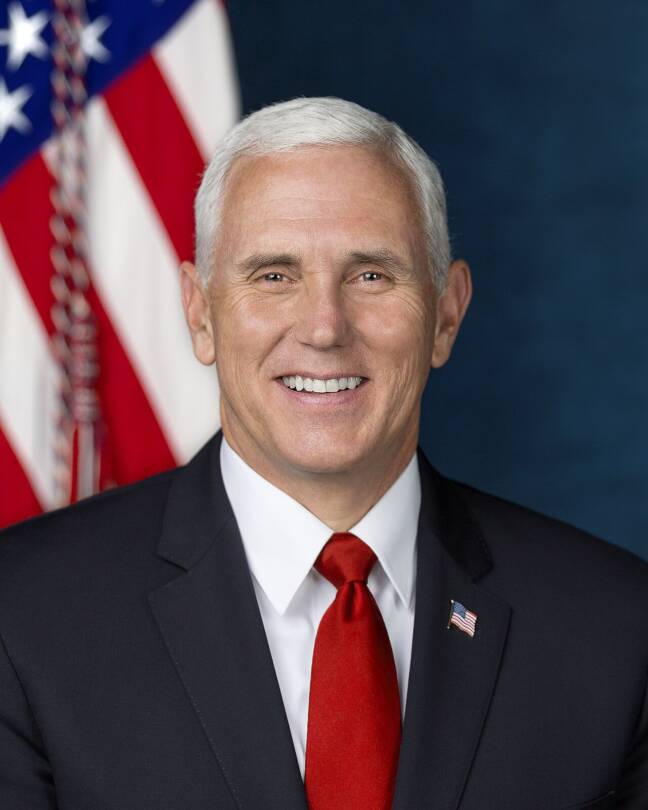
Mike Pence Net Worth 2026: From $600K Debt to $4 Million
Former Vice President of the United States
Mike Pence Net Worth 2026: From $600K Debt to $4 Million Net Worth & Financial Report
Table of Contents
- The $600,000 Debt and the Kiel Bros. Collapse
- Pensions, Not Profits: The Foundation of Pence’s Pre-VP Fortune
- The $1.4 Million Book Advance: ‘So Help Me God’ and Beyond
- From Public Servant to $4 Million: The Post-Vice Presidency Windfall
- A $1.9 Million Indiana Estate: Pence’s First Owned Home in Years
Mike Pence, a figure long associated with fiscal conservatism and a relatively modest public persona, has seen his financial standing undergo a dramatic transformation in recent years. For much of his career, his wealth was largely tied to government pensions, a stark contrast to many of his political peers. Yet, after leaving the Vice Presidency in January 2021, Pence’s financial fortunes quadrupled, pushing his estimated net worth to $4 million in 2026. This significant shift wasn’t built on inherited riches or corporate empires, but rather on the familiar post-political playbook of book deals and high-profile speaking engagements, a path that has allowed him to shed past financial struggles and build a more substantial personal estate.
The $600,000 Debt and the Kiel Bros. Collapse
Before his rise to national prominence, Mike Pence faced considerable financial hardship, a fact often overlooked in his public narrative. His early career saw him grapple with substantial debt, a situation exacerbated by a failed family business venture. In the early 2000s, Pence held a stake in Kiel Bros. Oil Co., an Indiana gas station and convenience store chain that his family helped build. When the company declared bankruptcy in 2005, Pence was left with a reported $600,000 in losses and debt. This period was so challenging that, early in his political career, Pence controversially used political donations to cover personal expenses like his mortgage, credit card bills, and even groceries, a practice that was legal at the time but drew criticism. This early financial instability paints a picture far removed from the comfortable wealth often associated with high-ranking politicians, highlighting a genuine struggle that shaped his financial prudence in later years.
Pensions, Not Profits: The Foundation of Pence’s Pre-VP Fortune
For nearly two decades of public service, Mike Pence’s financial bedrock wasn’t private enterprise or shrewd investments, but rather the steady accumulation of government pensions. As a U.S. Representative for 12 years and then Governor of Indiana for four, he accrued federal and state retirement benefits that eventually made him a millionaire. By 2019, his combined state and federal pensions were estimated to be worth approximately $1.2 million, providing a guaranteed income stream for life. This meant that, for a long time, his net worth was almost entirely illiquid, locked away in these retirement accounts. Unlike many of his colleagues who entered politics with significant personal wealth or built it through outside ventures, Pence’s pre-Vice Presidency finances were a direct reflection of his commitment to public service, with his pensions being his most substantial asset.
The $1.4 Million Book Advance: ‘So Help Me God’ and Beyond
The post-White House chapter proved to be a financial turning point for Mike Pence, largely fueled by the lucrative world of political memoirs and public speaking. In 2021, he signed a two-book deal with Simon & Schuster, with his autobiography, “So Help Me God,” reportedly securing a $1.4 million advance. This substantial payment was a major catalyst in his wealth accumulation, providing a significant cash infusion that was unprecedented in his financial history. The book, published in 2022, offered his perspective on his time in the Trump administration, particularly the events of January 6th, 2021. His wife, Karen Pence, also contributed to the family’s income, receiving a $75,000 advance for her own book, “When It’s Your Turn To Serve.” These literary endeavors marked a clear departure from his previous reliance on public salaries and pensions, opening new avenues for wealth generation.
From Public Servant to $4 Million: The Post-Vice Presidency Windfall
The period immediately following his departure from the Vice Presidency in January 2021 saw Mike Pence’s net worth surge dramatically. Forbes estimated that he quadrupled his fortune in less than three years, primarily through a combination of writing and extensive public speaking. Between January 2022 and June 2023 alone, Pence reportedly earned $3.4 million from delivering 32 paid speeches to various organizations, including international peace groups and universities. His speaking, writing, and consulting activities are channeled through Hoosier Heartland LLC, an entity that generated an additional $2.2 million in income since 2022. This post-political career boom transformed Pence from a public servant whose wealth was largely tied up in pensions to a multi-millionaire with a more diversified financial portfolio, a common trajectory for former high-ranking officials.
A $1.9 Million Indiana Estate: Pence’s First Owned Home in Years
One of the most tangible signs of Mike Pence’s newfound financial flexibility is his acquisition of a personal residence after years of living in official government housing. After leaving the Vice Presidency, Pence purchased a five-acre estate in Indiana in 2021 for $1.9 million. This marked a significant personal milestone, as he had not owned a home for many years, having resided in the Indiana Governor’s Mansion and then the Vice President’s official residence at Number One Observatory Circle. Beyond real estate, Pence has also expanded his investment holdings. His financial disclosures indicate holdings in various mutual funds and index funds, including a 401(k) plan through Hoosier Heartland LLC, worth between $95,000 and $250,000. Additionally, he holds significant amounts, between $500,000 and $1 million each, in a money market account and a Fidelity index fund. These investments, coupled with his real estate, represent a more robust and liquid asset base than he possessed during his decades in public office.
Frequently Asked Questions
References & Sources
Last updated: March 2026. Net worth estimates are based on public financial disclosures and independent research.