Ali Khamenei Net Worth 2026: The $95 Billion Empire Nobody Talks About
Supreme Leader of Iran
Ali Khamenei Net Worth 2026: The $95 Billion Empire Nobody Talks About Net Worth & Financial Report
Table of Contents
- The $95 Billion Setad Empire: A Cleric’s Unseen Fortune
- From a 60-Square-Meter Home to Vast Holdings: Khamenei’s Financial Paradox
- Seized Properties and the Baha’i Community: Setad’s Controversial Origins
- Beyond the Public Purse: How Setad Evades Parliamentary Oversight
- The “Off-the-Books Hedge Fund”: Pompeo’s 2018 Description of Setad
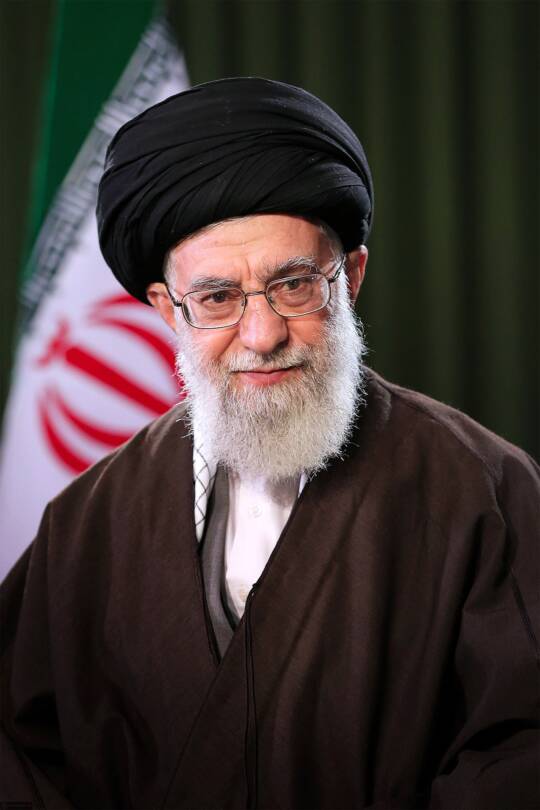
Ayatollah Ali Khamenei, the Supreme Leader of Iran, presents a public image of austere piety, a spiritual guide living a modest life. Yet, beneath this carefully cultivated facade lies a financial reality that is anything but humble. While his personal declared wealth is often cited as a mere $50,000, the economic empire he oversees through a powerful and opaque organization called Setad (Headquarters for Executing the Order of the Imam) is estimated to be a staggering $95 billion. This vast fortune, built largely on confiscated assets and sprawling corporate holdings, stands in stark contrast to the daily economic struggles faced by many ordinary Iranians.
The $95 Billion Setad Empire: A Cleric’s Unseen Fortune
The true scale of Ali Khamenei’s financial influence isn’t found in personal bank accounts, but in his control over Setad. This organization, formally known as Setad Ejraiye Farmane Hazrate Emam, was established in 1989 by Ayatollah Ruhollah Khomeini, Khamenei’s predecessor, with the initial mandate to manage and sell properties abandoned in the chaotic aftermath of the 1979 Islamic Revolution. It was intended to be a temporary body, dissolved after two years. However, under Khamenei’s leadership, Setad transformed into a colossal economic conglomerate, a financial juggernaut that operates independently of Iran’s parliament or elected government.
A landmark 2013 Reuters investigation meticulously detailed Setad’s holdings, estimating their value at no less than $95 billion. This figure, which at the time exceeded Iran’s entire oil export revenues for 2012, encompasses vast real estate, corporate stakes in telecommunications, banking, pharmaceuticals, agriculture, and oil-linked assets. Subsequent estimates from U.S. officials and analysts in 2019 suggested the broader network of companies and properties under the Supreme Leader’s authority could be worth closer to $200 billion. However, the $95 billion figure remains the most consistently cited and verifiable base for the empire’s value.
From a 60-Square-Meter Home to Vast Holdings: Khamenei’s Financial Paradox
Ali Khamenei’s personal narrative often highlights a humble upbringing. He has recounted living in a modest 60- to 70-square-meter house in a poor neighborhood of Mashhad during his childhood, a stark image of poverty where his mother sometimes went without food so her children could eat. He has stated that he had “neither one rial of savings nor any other prospects” before the revolution, implying that any wealth he now controls was acquired afterward.
This personal history of austerity stands in sharp relief against the immense financial power he wields as Supreme Leader. While he projects simplicity, with reports suggesting he lives in a basic residence in Tehran, his control over Setad grants him unparalleled economic leverage. The distinction is crucial: the wealth is not necessarily in his personal name, but the controlling authority and the immense benefits derived from this empire reside with his office, giving him immense financial power with little public accountability.
Seized Properties and the Baha’i Community: Setad’s Controversial Origins
The foundation of Setad’s wealth is rooted in deeply controversial practices. The organization systematically built its portfolio by seizing thousands of properties from ordinary Iranians. These seizures often targeted religious minorities, particularly members of the Baha’i community, as well as dual nationals and individuals with alleged ties to the Shah’s regime.
Setad frequently acquired these assets by claiming in Iranian courts, sometimes falsely, that the properties had been abandoned. This legal mechanism effectively stripped ownership from vulnerable populations. For instance, a couple interviewed by Reuters in California provided documentation showing Setad seized their property decades ago due to alleged ties to the Shah, and they received nothing for what would today be worth over $100 million. This method of accumulation has been a consistent source of criticism and highlights a less-known, darker aspect of the empire’s growth.
Beyond the Public Purse: How Setad Evades Parliamentary Oversight
One of the most striking aspects of Setad’s operation is its profound lack of transparency and accountability. The organization functions largely outside the purview of Iran’s elected government and parliament. In fact, Iran’s parliament reportedly declared in 2008 that it would be prohibited from exercising any oversight over Khamenei’s business interests. This institutional insulation allows Setad to operate as a parallel economic force, funding regime priorities and patronage networks independently of the official state budget.
The revenues generated by Setad are not subject to public scrutiny or parliamentary approval, granting the Supreme Leader an extraordinary degree of financial autonomy. This structure enables the funding of various initiatives, including support for aligned factions within the Islamic Revolutionary Guard Corps (IRGC) and insulating the regime from the financial pressures of international sanctions. The opaque nature of its finances means that the exact allocation of its vast resources remains largely unknown to the public and even to many within Iran’s political establishment.
The “Off-the-Books Hedge Fund”: Pompeo’s 2018 Description of Setad
The secretive and expansive nature of Setad led then-U.S. Secretary of State Mike Pompeo to famously describe it in 2018 as Khamenei’s personal “off-the-books hedge fund.” This characterization underscored the perception that Setad, while technically an institutional entity, served as a powerful financial instrument directly controlled by the Supreme Leader, allowing him to exert immense economic influence without direct personal ownership or public disclosure.
The description highlights a critical aspect of Khamenei’s financial power: it is not merely about personal enrichment, but about consolidating and maintaining political leverage. The funds and assets controlled by Setad are used to build patronage networks, reward loyalists, and project Iranian influence both domestically and internationally, often circumventing international financial restrictions. This makes Setad not just an economic entity, but a strategic tool in the complex web of Iranian power.
Frequently Asked Questions
References & Sources
Last updated: March 2026. Net worth estimates are based on public financial disclosures and independent research.